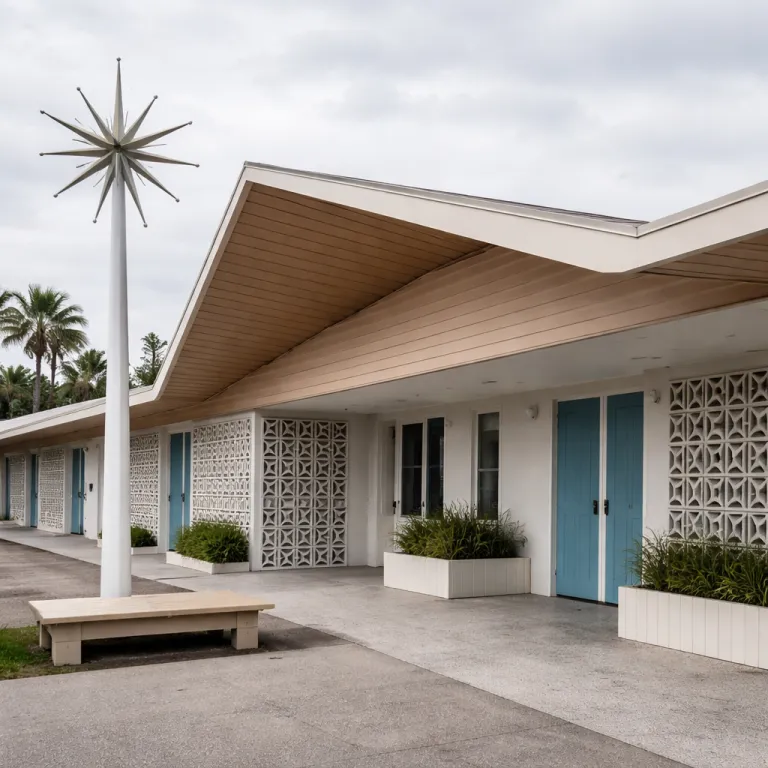
Googie Architecture Motels: Design‑Led Stays for Modern Road Trips
From coffee shop fantasies to highway icons
Googie architecture motels were born from the same exuberant energy that reshaped postwar American highways. In Southern California, the first Googie coffee shop on Sunset Boulevard, designed by architect John Lautner in 1949 for restaurateur Mortimer C. Burton, turned a simple stop for eggs and filter coffee into a stage set for the Space Age. That single coffee shop, with its upswept roofline, dramatic cantilevers and theatrical glass, quietly rewrote what a roadside stay or meal could feel like for drivers pulling off U.S. Route 66.
When editor Douglas Haskell later observed this emerging architectural style in Los Angeles, he famously asked his driver for a U-turn in traffic just to look again at the sharp angles and neon. His verdict, published in a 1952 issue of House & Home, still defines the movement today: “What defines Googie architecture? Futuristic designs with bold geometric shapes and neon lights.” From that moment, the term Googie architecture attached itself to a whole family of coffee shops, motels and gas stations across the United States, especially in car‑centric regions like Southern California.
For travelers booking premium rooms now, those early experiments in Googie style still matter. The best Googie architecture motels translate that mid‑century optimism into tangible comforts such as generous parking, wide exterior corridors and glass‑walled lobbies that glow after dark. You are not only reserving a bed near the highway; you are buying into a historic narrative where architecture, car culture and the promise of the open road meet in a very specific mid‑century modern roadside design language.
Neon, angles and the romance of arrival
Arriving at a well‑kept Googie property feels different from pulling into a generic chain. The sign usually hits you first, a sculptural beacon designed to catch motorists from far down the asphalt, especially in cities like Las Vegas, San Diego or Los Angeles where traffic never really sleeps. Those neon letters, starbursts and boomerang shapes are not mere decoration; they are wayfinding, marketing and architectural statement in one glowing package that signals you have reached a classic mid‑century roadside motel.
Classic examples such as the Safari Inn in Burbank, with its iconic neon sign and mid‑century silhouette, or the exuberant Orbit Inn in Palm Springs, show how a strong architectural style can frame an entire stay. Their exaggerated rooflines, patterned concrete block and theatrical lighting create a sense of occasion before you even reach the lobby doors. In Las Vegas, surviving Googie architecture motels and motor courts still compete with casino towers by leaning into pure Space Age drama rather than height, using animated neon and bold geometric canopies to stand out along the Strip and surrounding boulevards.
For couples planning a romantic road trip, this drama translates into atmosphere you can feel from the parking lot. A kidney‑shaped pool edged with Art Deco‑inspired tiles, a row of doors facing the courtyard and a well‑restored mid‑century sign all signal that someone has cared for the property over decades. When you browse luxury listings, look for language about preserved neon, original architectural details and mid‑century modern features such as terrazzo, clerestory windows or breeze‑block screens rather than just thread counts and generic “boutique” claims.
Wildwood, doo wop dreams and the motel as design museum
On the opposite coast, the motels of Wildwood and Wildwood Crest in New Jersey turn this Googie story into a full‑scale open‑air museum. Here, more than two hundred structures form what preservationists call the Doo Wop District, a reference to the playful doo‑wop music era that matches the architecture’s exuberance. Many of these properties were designed with boomerang balconies, starburst railings and Space Age towers that feel almost theatrical today, especially when lit at night along Ocean Avenue and Atlantic Avenue.
Staying in a motel or Wildwood property with strong Googie style is not about nostalgia alone. You are sleeping inside a living archive of mid‑century architectural experimentation, where every stair rail and pool light reflects the optimism of the period. Preservation groups and local owners work together as a kind of informal équipe, balancing historic integrity with the modern comforts that today’s premium guests quietly expect, from updated HVAC systems to refreshed bathrooms that still respect original tile patterns.
Some Wildwood houses turned motels now offer high‑thread‑count linens, curated minibars and carefully restored Art Deco details without erasing their Googie architecture roots. Look for listings that mention original tiles, period‑correct colors and restored coffee shops on site, rather than full gut renovations that flatten the character. When you compare options, remember that a slightly smaller room can be worth it if the architectural story remains intact and the neon still hums outside your window, casting that distinctive colored glow across the parking court.
From Big Boy signs to minimalist revivals
Not every traveler wants a pure time capsule, and the best contemporary renovators understand that tension. Properties such as the Amigo Motor Lodge in Salida, Colorado, show how a sixty‑year‑old shell can become a modern retreat without losing its mid‑century bones. Here, the exterior lines nod to Googie architecture motels while interiors lean toward minimalist mid‑century modern with warm timber, simple forms and Southwestern textiles that feel current rather than theme‑park retro.
Across the United States, you will see similar strategies at work in former roadside stops once associated with Big Boy or Bob’s Big Boy style mascots. The oversized Bob’s Big Boy statues and playful sign typography may remain outside, while inside the rooms shift toward calm palettes, better insulation and discreet technology. This approach respects the original architectural style and signage as historic artifacts, while acknowledging that today’s couples expect strong Wi‑Fi, high‑pressure showers and thoughtful lighting layered for both reading and relaxation.
Architects such as Armet & Davis and other mid‑century specialists pioneered many of the structural moves that make these conversions possible. Their original coffee shops and motels used steel, glass and cantilevered roofs that adapt well to new insulation, glazing and acoustic upgrades. When you browse a luxury booking platform, look for mentions of original Armet & Davis lineage, preserved Googie coffee shop spaces or carefully restored Vegas‑era neon as signals that the renovation team understood the building’s DNA and treated it as a piece of mid‑century roadside heritage.
How to choose a Googie style stay that feels truly premium
For a couple planning a design‑led escape, the challenge is separating kitsch from considered restoration. Start by reading how the property describes its architecture; serious operators will reference mid‑century or mid‑century modern influences, name architects where known and explain what has been preserved. Vague mentions of “retro vibes” without detail often signal surface‑level décor rather than genuine architectural care or authentic Googie motel design.
Next, study photography of the exterior, especially the sign, pool and circulation areas such as staircases and walkways. In authentic Googie architecture motels, these elements carry as much design intent as the rooms themselves, from angled columns to Space Age canopies over the parking bays. If the imagery focuses only on bed close‑ups and ignores the building’s form, you may be looking at a standard refurb wrapped in nostalgic marketing rather than a true mid‑century roadside landmark.
Finally, consider how the motel balances romance with practicality for your specific trip. A historic Los Angeles or Las Vegas property with a spectacular neon sign and original coffee shops might be perfect for a short stay focused on ambiance and photography. For longer trips, you might prefer a house‑like conversion where the Googie style survives in the roofline and courtyard, but interiors feel quietly modern, with good storage, acoustic privacy and perhaps even guidance on elevated travel wardrobes and packing strategies provided alongside your booking details.
FAQ
What makes Googie architecture motels different from other retro properties?
Googie architecture motels are defined by bold geometric forms, upswept roofs and neon signage that grew out of postwar car culture. They differ from generic retro‑themed stays because the architecture itself, not just the décor, expresses Space Age optimism. When you book one of these motels, you are engaging with a specific mid‑century architectural movement rather than a loose nostalgic theme, and the building’s silhouette, sign and circulation patterns all reflect that history.
Where are the best regions to experience authentic Googie style motels?
Southern California remains the spiritual home, with Los Angeles and its surrounding highways still hosting several historic examples along former U.S. Route 66 and major boulevards. Wildwood and Wildwood Crest on the New Jersey shore offer one of the densest clusters of Doo Wop era motels in the United States. Las Vegas and other Vegas corridor towns also retain classic neon‑signed properties that showcase the full drama of Googie architecture motels, especially along Las Vegas Boulevard and nearby arterial roads.
Can Googie era motels offer true luxury for modern travelers?
Many restored properties now combine preserved mid‑century architecture with contemporary comforts such as high‑quality bedding, upgraded bathrooms and curated minibars. The most successful projects keep original signs, pools and coffee shop spaces while quietly improving acoustics, climate control and digital connectivity. For couples, this blend of Space Age fantasy and present‑day comfort can feel more memorable than a conventional high‑rise hotel, particularly when paired with thoughtful service and locally informed recommendations.
How do I know if a Googie style motel has been sensitively renovated?
Look for detailed descriptions of what has been preserved, such as original neon, structural lines or Art Deco‑influenced tiles, rather than generic “retro” language. Photography should highlight the building’s exterior, sign and shared spaces, not only the soft furnishings. Reviews that mention both design character and practical strengths such as cleanliness, soundproofing and service are a strong indicator of thoughtful stewardship and a renovation team that respected the Googie architecture.
Are Googie architecture motels mainly about nostalgia or real cultural value?
These motels hold genuine cultural value because they document how mid‑century America expressed optimism about cars, technology and the future through architecture. Preservation efforts in places like Wildwood and Los Angeles treat them as historic resources, not just backdrops for social media. When you stay in one, you participate in keeping that architectural story alive while supporting owners who invest in its careful maintenance, from neon restoration to historically informed color schemes.