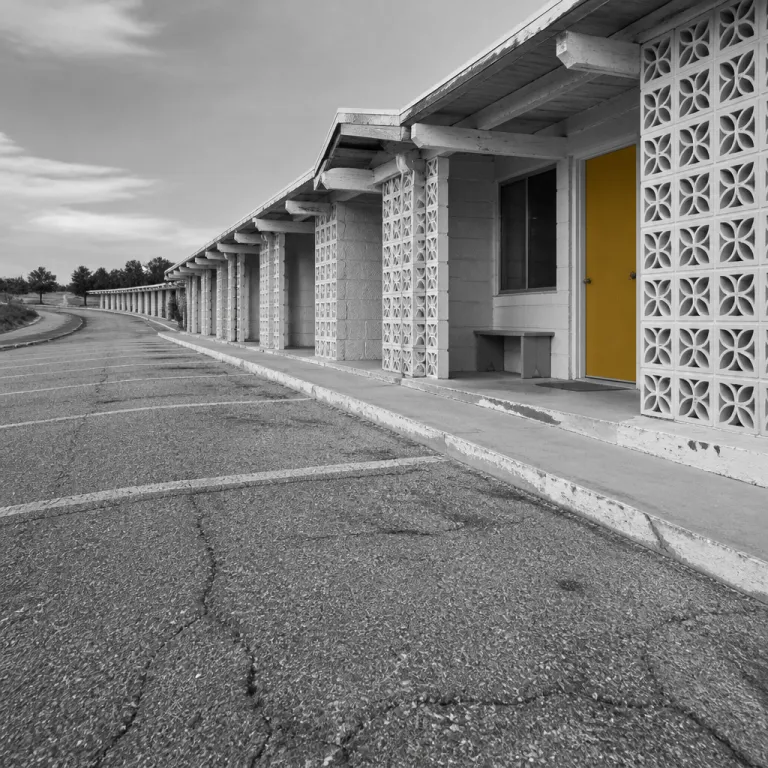
From roadside relics to rare luxury: the new value of mid century motels
Across the United States, the inventory of authentic mid century motel properties is shrinking fast. As conversion brands expand and real estate values climb in every growing city, many motel owners now face a stark choice between careful preservation and a lucrative teardown. For travelers who care about mid century motel heritage and the fate of these roadside landmarks, that choice directly shapes where you sleep, what you see from your parking space and how the story of American road travel is told.
Data from Lodging Econometrics indicates that hotel conversions now account for more than a thousand projects nationwide, with combined conversion and renovation activity representing hundreds of thousands of rooms in America.1 In its U.S. Hotel Construction Pipeline Trend Report for Q4 2023, the firm tracked more than 1,000 active conversion projects and over 130,000 rooms, a scale that directly affects older roadside properties. That surge includes classic highway hotels and modest roadside motels, many of them built in the middle of the last century with distinctive modern architecture and neon-forward design. When a sixty-year-old building is stripped to the studs or replaced entirely, the historic features that once defined a place can vanish in a single development cycle.
Preservation advocates argue that these historic places are not just sentimental backdrops for retro-themed road trips. They are physical records of social change, car culture and the evolution of resort cities from Wildwood to Los Angeles and beyond. The National Trust for Historic Preservation and local preservation league groups now treat midcentury modern motels as critical pieces of the national story, not just quirky properties with a few fun signs and a kidney-shaped pool. As one National Trust field director notes, “When you lose a mid century motel corridor, you erase an entire chapter of American mobility and design in one zoning meeting.”
Doo wop neon, terrazzo floors and the real economics of preservation
On the Jersey Shore, the Wildwoods motel cluster has become a case study in how doo wop architecture can move from endangered novelty to protected asset. In this historic district, low-slung motels with starburst railings, space-age canopies and exuberant doo wop neon once faced near-constant pressure from condominium real estate projects. Today, a mix of historic preservation tools, focused doo wop preservation advocacy and selective adaptive reuse has helped motel owners keep more of these properties trading as viable hotels rather than speculative land plays. Local ordinances now require design review for demolitions in key streets, and several landmarked motels have secured façade easements that protect their most distinctive mid century features.
For a typical mid century motel, the financial equation is nuanced rather than simple nostalgia versus profit. Demolition and new construction can unlock higher room counts and contemporary amenities, yet it also erases the very modern architecture that differentiates these hotels in a crowded market. Sensitive renovation, by contrast, can retain original building lines, terrazzo floors and period signage while upgrading systems, which often results in higher nightly rates for travelers seeking authentic mid century motel experiences. In Wildwood, for example, a restored 1950s property that preserved its original pool deck and neon script sign reported double-digit RevPAR growth after a phased mid-century motel restoration.
Investors now recognise that a well maintained historic property can command a premium when the preservation story is clear and the guest experience feels intentionally modern. Articles that analyse the preservation details that separate great motel renovations from gut jobs show how details like original railings, classic pool shapes and restored signage translate into real pricing power. As one preservation planner notes, “The motels that keep their bones and character consistently outperform lookalike new builds in both rate and reviews.” In this context, the line between a characterful midcentury modern motel and a generic roadside hotel often comes down to whether owners treat historic features as assets to be curated or obstacles to be removed, and whether they use tools such as historic motel tax credits to make the numbers work.
Registers, districts and trusts: what protection really means for a motel
Travelers often assume that once a motel appears on a national register or local list of historic places, the building is safe from the bulldozer. In reality, listing on the National Register of Historic Places or within a city-designated historic district usually offers recognition and potential tax incentives rather than absolute protection. For motel owners, that means the decision to pursue historic preservation status is as much about long-term positioning as it is about regulation, especially when federal historic rehabilitation tax credits can offset up to 20 percent of qualified mid century motel restoration costs.
The National Trust for Historic Preservation has highlighted several adaptive reuse projects from Historic Hotels of America that show how trust-based historic partnerships can work in practice. In these cases, a former motel or hotel building is reimagined with modern interiors while retaining its mid century shell, often supported by grants, tax credits and guidance from a preservation league or local government. The result is a property that can trade at premium rates, attract design-conscious guests and still qualify as a contributing structure within a national or city register historic framework. Recent examples include 1950s motor courts converted into boutique hotels that kept their drive-up layouts, neon marquees and courtyard pools while upgrading rooms to contemporary comfort standards.
For road trip couples planning a route along classic corridors such as Route 66, choosing to stay in a listed motel rather than a generic highway hotel becomes a direct vote for mid century motel preservation. Guides to the motels still worth the detour increasingly flag which properties sit within recognised historic districts or appear on the national register. When you book these hotels, you help demonstrate to owners and lenders that preserving modern architecture can be as commercially sound as building a new, anonymous block, particularly when occupancy data shows that restored historic motels often outperform non-descript competitors in shoulder seasons.
Civil rights, the Green Book and the politics of the parking lot
Mid century motels are not only about playful doo wop facades and glowing signs; they also hold a complex civil rights history. Properties such as the Gaston Motel in Birmingham and the Lorraine Motel in Memphis served as crucial meeting points, safe havens and sometimes tragic stages during the struggle for racial equality in America. These sites remind travelers that preserving mid century motel heritage is inseparable from the story of who was allowed to check in, who needed the Green Book and which city streets were safe after dark. The Lorraine Motel, now part of the National Civil Rights Museum, shows how a former roadside lodging can become a powerful interpretive centre while still reading clearly as a 1950s motor inn.
When a historic motel with this kind of background is demolished or radically altered, the loss goes far beyond a single building. The parking lot where activists gathered, the modest lobby where leaders planned strategy and the simple guest rooms where families finally rested after segregated highways all represent irreplaceable historic features. As preservation advocates explain, “They represent post-WWII architectural and cultural history,” and their disappearance erases a tangible link to that era. In Birmingham, for instance, the ongoing restoration of the Gaston Motel has focused on reconstructing key exterior elements so visitors can understand how the site functioned during the 1960s.
National organisations such as the National Trust for Historic Preservation work alongside local preservation league groups and motel owners to stabilise and restore these nationally significant properties. Some become interpretive centres or museums, while others continue trading as hotels with carefully framed narratives about their past. For travelers, choosing these motels over anonymous hotels is a way to engage directly with United States history while still enjoying modern comfort and attentive service, and to support communities that are actively interpreting civil rights stories through preserved mid century motel architecture.
How to book in a way that keeps the neon glowing
For couples planning a romantic road trip, supporting mid century motel preservation starts long before arrival at the front desk. The first step is to look beyond the nearest chain hotel and seek out independent motels that advertise original mid century design, documented historic status or partnerships with a preservation league. Many of these properties now appear on curated platforms that specialise in characterful hotels and motels rather than generic lodging, and some explicitly highlight their participation in historic motel tax credit or façade grant programmes.
When you research, pay attention to whether a property highlights its building history, mentions national register listing or references collaboration with the National Trust for Historic Preservation or local groups. A motel that explains its modern architecture, celebrates its doo wop or midcentury modern lines and details recent preservation work is usually more committed to authenticity than one that simply markets a retro-themed room. Articles such as guides to locking in a summer motel stay can help you identify properties where preservation and comfort align, especially when they call out specific restoration projects, from terrazzo lobby floors to rebuilt neon pylons.
Once on site, your spending patterns matter as much as your booking choice, because local businesses in historic districts rely on guests who value context. Stay an extra night in a carefully restored motel, dine at independent restaurants in the city centre and join heritage tours that explain why certain hotels and motels survived while others did not. As preservation advocates often note, “Support local preservation groups and visit historic sites” and “Participate in heritage tours,” because those actions keep the lights on for the people doing the work and send a clear signal that authentic mid century motel restoration is worth the investment.
FAQ
Why are mid century motels considered historically important for travelers today ?
Mid century motels capture a specific moment when car travel reshaped the United States, from new resort cities to expanded suburbs. Their modern architecture, neon signage and drive-up layouts illustrate how design responded to the growing freedom of the open road. For travelers, staying in these historic places offers a direct connection to that cultural shift rather than a themed re-creation, and turns an overnight stop into a small act of historic motel preservation.
How can I tell if a motel is genuinely preserved or just retro themed ?
A genuinely preserved motel usually retains its original building form, key historic features and often references national register or local historic district status. Retro-themed hotels may add mid century style furniture and colours but lack authentic materials such as terrazzo, original railings or period-correct signage. When in doubt, look for clear information about preservation work, collaboration with a preservation league and transparent discussion of what is original versus newly installed, along with any mention of historic motel tax credits or grants that supported the project.
Does listing on the National Register of Historic Places fully protect a motel ?
National register listing recognises a motel as historically significant and can unlock tax incentives or grants, yet it rarely guarantees absolute protection from demolition. Actual safeguards depend on local planning rules, ownership decisions and whether public funding is involved in any redevelopment. Travelers who value mid century motel preservation can still influence outcomes by choosing to stay at listed properties and supporting owners who maintain them, reinforcing the case for ongoing mid century motel restoration.
What role do travelers play in supporting motel preservation efforts ?
Travelers influence preservation every time they choose a historic motel over a new highway hotel, especially in markets where land values are rising. Consistent bookings, positive reviews that mention historic features and participation in heritage tours all signal demand for authenticity. Over time, that demand helps motel owners justify investment in careful restoration rather than opting for a complete teardown, and encourages lenders to see historic motel tax credits and preservation plans as part of a viable business model.
Are preserved mid century motels compatible with luxury and premium expectations ?
Many preserved mid century motels now blend original architecture with high quality bedding, refined service and thoughtful amenities that appeal to premium travelers. The most successful properties treat their historic fabric as a design advantage, layering modern comfort onto intact structures rather than erasing them. For couples seeking romance and character, this combination often feels more memorable than a standard upscale hotel room, especially when the story of the motel’s restoration is part of the stay.
1 Lodging Econometrics, U.S. Hotel Construction Pipeline Trend Report, Q4 2023 (recent editions summarise national conversion and renovation activity, including more than 1,000 active conversion projects and over 130,000 rooms).