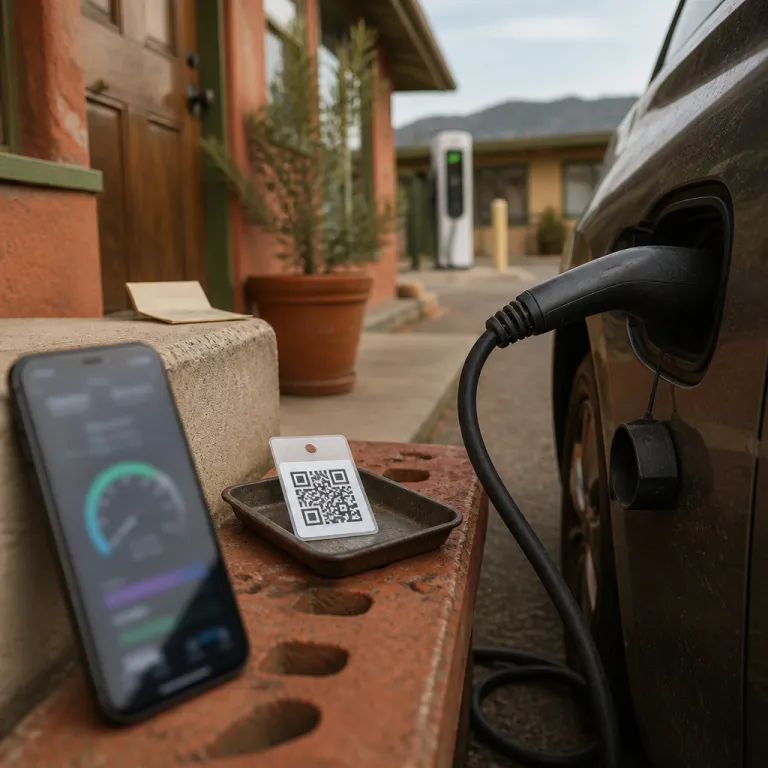
Reading a motel’s future through its technology choices
Walk into a roadside motel and the technology tells you everything. The way Wi-Fi, an EV charger and a digital check-in are handled reveals whether the business is quietly coasting or actively investing in its next decade. For guests balancing business and leisure, this mix of connectivity, on-site charging and contactless arrival now matters as much as thread count.
Owners sit at a crossroads where hospitality tradition meets infrastructure reality. Motel owners are the decision makers who choose whether to fund charging infrastructure, upgrade routers or roll out QR codes at the front desk. Technology providers, from Wi-Fi specialists to commercial charging companies, stand ready with charging solutions that can transform a tired property into a credible station hotel for modern drivers.
Across the United States, this shift is no longer theoretical. Motels nationwide are integrating high speed internet, electric vehicle charging stations and QR code check-ins as part of a broader strategy to future proof their business. The stated objectives are simple: enhance guest satisfaction, attract tech savvy travelers and keep occupancy high in a market where branded hotels charging ahead with standards can easily outshine independent properties.
Why connectivity is the first signal of a serious motel
Start with Wi-Fi, because your day probably does. For a 30 room motel catering to laptop open executives, fast Wi-Fi means at least 25 to 50 Mbps per room during peak hours. That usually requires a fiber line into the property, business grade routers and extenders, and a willingness to treat bandwidth as core hospitality infrastructure rather than an optional charge.
Recent hospitality technology surveys report that roughly four out of five travelers now rank high speed Wi-Fi as a top amenity, often ahead of pools and breakfast. In motels where most guests say they prefer reliable connectivity, the gap between a robust network and a single aging router is the gap between repeat hotel guests and one star reviews. When you see a property advertising clear Mbps numbers rather than vague “high speed” promises, you are looking at an owner who understands both guest experience and commercial reality.
Independent hotels often struggle with disconnected systems, and 67% of them report that this limits the impact of AI and automation, according to a 2023 Cloudbeds industry report. That same fragmentation shows up when a motel’s Wi-Fi, property management system and digital check-in tools do not talk to each other. When everything is integrated, from the QR code at the door to the cloud based station that logs your car registration, the stay feels seamless and the business gains data it can actually use.
How to read the Wi-Fi setup before you book
Guests should treat Wi-Fi details as a proxy for operational discipline. Look for whether the hotel lists specific speeds, mentions fiber or cable, and explains coverage in all rooms rather than only in the lobby. A motel that has invested in proper access points every few rooms, rather than a single consumer router at reception, usually applies the same care to vehicle charging and other infrastructure.
Before you book, ask three direct questions by email or chat. First, what is the typical download and upload speed per room during the evening peak, when hotel guests are streaming and joining calls. Second, is there a separate secure network for business travelers, which signals that the property understands data privacy and the needs of commercial guests.
Third, clarify whether there is any extra charge for premium speeds or multiple devices. The dataset guidance for travelers is clear: check for available amenities before booking, ensure your devices are compatible with provided services and inquire about any additional fees for premium services. A motel that answers these questions precisely is usually the same kind of place that will have thought carefully about its charging stations, its QR code flows and its overall guest experience.
EV chargers in the parking lot: who a motel is really courting
Step outside to the parking lot and the next signal appears in metal and cable. An EV charger sitting under the neon sign is no longer a novelty; it is a statement about which drivers the motel wants to attract. For business leisure travelers arriving in electric vehicles, the presence or absence of vehicle charging can decide where the reservation lands.
The calculus starts with the type of charging station installed. Level charging at 7 to 11 kW, delivered through level chargers mounted on pedestals or walls, suits overnight hotel charging where guests sleep while their vehicles charge slowly. DC fast charging, often called fast charging, can push 50 kW or more and turns a motel into a mini hub for passing electric vehicle drivers who need a quick top up during a meeting or lunch.
Installation costs vary widely depending on grid capacity and trenching distance, but the strategic question is simpler. A motel that invests in commercial charging rather than a single residential charger is signaling that it expects a rising share of guests to arrive in electric vehicles. That choice aligns with the roughly 30% increase in EV ownership among travelers reported in recent EV market studies, and it turns a once generic parking lot into a revenue generating charging experience for eco conscious guests.
Level 2 versus DC fast charging: what it means for your stay
For most 30 room properties, level charging is the pragmatic starting point. A pair of level chargers can comfortably handle overnight demand from several electric vehicles without overwhelming the local grid or the motel’s capital budget. Guests plug in after dinner, sleep, and wake to a fully charged car ready for the next leg of the trip.
DC fast charging changes the dynamic entirely. With fast charging, a station hotel can attract non staying drivers who pay to charge while using the café, meeting room or lobby workspace, creating a new commercial revenue stream. That kind of commercial charging setup requires heavier infrastructure, careful load management and often a partnership with a specialist technology provider.
From a guest perspective, the presence of both level chargers and at least one fast charging unit is the gold standard. It means the motel has thought about hotel guests staying overnight and passing drivers who only need a short stop. When you see clear signage about charging stations, transparent pricing per kilowatt hour and well lit bays reserved for electric vehicles, you are looking at a property that treats vehicle charging as part of its core hospitality offer rather than a marketing afterthought.
EV charging as a filter for serious sustainability
Electric vehicle charging infrastructure does more than refill batteries; it reveals whether sustainability is a slogan or a strategy. Motels that integrate charging stations with energy management systems and, where possible, rooftop solar tend to run tighter operations overall. Energy management systems and IoT sensors can cut hotel energy consumption by up to 40%, according to Verdant and Copeland, and the smartest charging hotels use those same tools to time vehicle charging when grid demand is lower.
Look for how many chargers are available relative to the number of rooms. A single shared charger for 80 hotel guests suggests a token gesture, while multiple stations hotels with clear booking rules show serious planning. Properties that publish their kilowatt hour rates, explain whether the charge is bundled with the room or billed separately, and outline any idle fees are usually the ones that understand both guest experience and business margins.
There is also a clear link between EV chargers and the eco conscious traveler segment. Guests who drive electric vehicles often choose where to stay based on reliable charging solutions, and they tend to be vocal reviewers when the charging experience fails. When a motel’s website maps out its charging infrastructure, names its technology partners and explains how vehicle charging fits into its sustainability program, you can safely assume that other operational details are handled with similar care.
QR-code check-in: the front desk as a software decision
Move from the parking lot back to the lobby and the third signal appears in your hand. A QR code check-in process, when executed well, is not just a gimmick; it is a window into how the motel runs its operations behind the scenes. For business leisure travelers arriving late from the airport, the difference between a queue and a 30 second scan is the difference between friction and relief.
Digital check-in usually rides on top of a modern property management system that connects reservations, payments and room access. When a motel offers a QR code that lets a guest confirm details, sign registration cards and even trigger a mobile key, it shows that the owner has invested in software rather than only in surface renovations. That same mindset often extends to how the property manages EV charging, Wi-Fi bandwidth and other station level services.
Adoption is accelerating across the sector, with around 60% of motels now using some form of digital check-in, according to recent hospitality digital trends research. The advantages are clear in the dataset: “What are the advantages of QR-code check-ins? Speeds up the check-in process and reduces physical contact.” For guests, the benefit is not only speed but also accuracy, because the data you enter flows directly into the system that manages your stay rather than being retyped from a paper form.
What a QR-code flow reveals about the owner’s mindset
Pay attention to how the QR code is presented when you arrive. A laminated sign taped to the front desk that leads to a clunky form suggests a half finished project, while a clean, branded flow that recognizes your reservation and offers room preferences signals a mature digital operation. The best implementations let a guest complete most steps before arrival, then use the code on site only to verify identity and issue keys.
That level of integration usually means the motel has also connected its EV charging station software and its Wi-Fi access control to the same backbone. For example, a guest might receive a single confirmation email that includes the room number, Wi-Fi credentials and instructions for using the charging stations, all generated from one system. When the front desk team can see in real time which vehicles are connected to which chargers, they can manage parking and charging hotels policies far more effectively.
For you as a traveler, the presence of a polished QR code check-in is a strong indicator that the motel is not stuck in a previous era. It suggests that the owner is comfortable working with technology providers, that staff have been trained on new tools and that the property is likely to keep evolving. In a world where IHG has shown in its Americas development updates that tech standardization can drive pipeline growth across conversion properties, independent motels that emulate this digital discipline stand out immediately.
When contactless goes wrong, and what that tells you
Of course, not every digital check-in is created equal. If the QR code leads to a broken page, if the system fails to recognize your booking or if you still need to fill out the same details on paper, you are seeing the symptoms of disconnected systems. That same lack of integration often shows up in unreliable Wi-Fi, poorly managed charging stations and a general sense that the left hand does not know what the right is doing.
Guests should not hesitate to judge a motel by how it handles these basics. A property that blames the technology rather than fixing the process is unlikely to manage complex services like commercial charging or fast charging with any more rigor. Conversely, when staff can quickly override a glitch, resend a QR link or manually start a vehicle charging session from a tablet, you are seeing a team that understands both the tools and the hospitality fundamentals.
For business travelers extending a trip into leisure, this reliability is non negotiable. You may arrive late, need to charge an electric vehicle overnight and join a video call from your room before breakfast. A motel that nails the triangle of strong connectivity, dependable EV charging and smooth digital check-in will quietly support that rhythm, while one that fumbles any leg of the triangle will turn a simple stay into a sequence of avoidable frustrations.
Independent motels versus branded hotels: decoding the tech gap
Branded hotels operate with playbooks that specify everything from pillow types to charging infrastructure. When a major flag rolls out hotel charging standards, franchisees know exactly how many chargers to install, what software to use and how to integrate billing with loyalty programs. That consistency makes it easier for hotel guests to predict the charging experience, but it can also limit experimentation at the property level.
Independent motels, by contrast, live or die by the owner’s judgment. Some station hotels have leapfrogged their branded competitors by installing more flexible charging solutions, smarter Wi-Fi and more intuitive digital check-in flows. Others remain stuck with a single slow charger, a patchy network and a front desk that still photocopies passports, revealing a business strategy that prioritizes short term savings over long term competitiveness.
The data on disconnected systems is especially stark for independents, with 67% reporting that their fragmented technology limits the impact of automation, according to Cloudbeds. That fragmentation often shows up in small ways, like a charging station that cannot talk to the reservation system or a Wi-Fi portal that does not recognize loyalty guests. When you see a motel where the same app or portal manages your room, your car charging and your receipts, you are seeing an independent that has closed the gap with the big brands.
What tech standards mean for your stay
For travelers, the branded versus independent question should be less about logos and more about signals. In a branded property, you can usually assume a baseline of charging infrastructure, from at least one level charger to clear signage about vehicle charging policies. You can also expect a certain standard of digital check-in, even if the experience sometimes feels generic rather than tailored.
In an independent motel, the variance is wider but the upside can be higher. Some of the most forward looking charging hotels in the United States are family run properties that partnered early with EV charging companies and software developers to build commercial charging hubs. These motels often pair multiple charging stations with upgraded Wi-Fi, smart thermostats and QR code check-in, creating a guest experience that feels both personal and technologically current.
When evaluating options on a booking platform, read between the lines of the amenity list. A motel that specifies the number and type of chargers, details its Wi-Fi speeds and explains its digital check-in process is usually more reliable than one that simply lists “internet” and “EV friendly.” For deeper context on how these choices play out across different regions and seasons, guides such as the summer focused planning piece on locking in a summer motel stay while rooms last can help you benchmark what to expect.
How tech choices reveal a motel’s business strategy
Every technology decision carries a strategic subtext. A motel that installs only one basic charger is signaling that it sees EV drivers as occasional guests, while a property that builds a bank of commercial charging stations is betting on electric vehicles as a core market. Similarly, a motel that offers only lobby Wi-Fi is quietly telling you that it does not expect guests to work seriously from their rooms.
Digital check-in choices send equally clear messages. If a property invests in a polished QR code flow that integrates with payment, loyalty and room assignment, it is prioritizing operational efficiency and data quality. That same mindset usually shows up in how the motel manages maintenance, staffing and revenue, because the owner is thinking in systems rather than in isolated fixes.
For the business leisure traveler, reading these signals becomes a practical skill. You are not just choosing a bed for the night; you are choosing an infrastructure partner for your laptop, your electric vehicle and your schedule. The motels that treat their connectivity, EV charging and digital check-in as a single strategic canvas, rather than three separate line items, are the ones most likely to support that partnership gracefully.
How to audit a motel’s tech stack before you arrive
You can learn a surprising amount about a motel’s technology without ever stepping onto the property. Start with the website and booking engine, where serious operators now list specific Wi-Fi speeds, the number and type of charging stations and a clear explanation of digital check-in. If the site still looks like a static brochure, chances are the back end systems are equally dated.
Next, read recent reviews with a filter for connectivity, charging and check-in. Guests are quick to mention when an electric vehicle charger is broken, when the Wi-Fi collapses during video calls or when a QR code check-in fails at midnight. Look for patterns rather than isolated complaints; consistent praise for the charging experience or the ease of digital check-in is a strong indicator that the systems are stable.
Finally, do not hesitate to contact the property directly with precise questions. Ask how many chargers are available, whether they are level chargers or fast charging units, and whether there is a fee per charge or per hour. Clarify whether the Wi-Fi is suitable for video conferencing and whether digital check-in is mandatory or optional, especially if you are managing sensitive business travel.
Questions that separate marketing from reality
Certain questions tend to reveal whether a motel’s technology claims are marketing gloss or operational fact. When you ask about charging infrastructure, listen for whether staff can explain the difference between overnight level charging and daytime fast charging, and whether they know how many vehicles can charge simultaneously. If the answer is vague, expect similar fuzziness when you arrive.
For Wi-Fi, ask whether there is a backup plan if the primary connection fails, such as a secondary line or a 5G router. Properties that have thought through redundancy usually also have contingency plans for EV chargers, like alternative charging stations nearby or clear protocols when a charger is offline. The same operational maturity often extends to digital check-in, where a motel with a robust system will have a manual fallback that does not involve chaos at the front desk.
When evaluating options in specific markets, such as a refined stay in Arizona, curated guides like the piece on elegant ways to book a motel in Phoenix for a refined stay can help you identify properties that already meet higher standards. These motels tend to treat their Wi-Fi, EV charging and QR code check-in as part of a coherent guest journey rather than as scattered upgrades. Over time, that coherence becomes the clearest signal that a motel is investing in its future rather than simply repainting the façade.
How tech readiness shapes your on-the-road flexibility
For executives turning a work trip into a road trip, flexibility is the real luxury. A motel with reliable Wi-Fi, predictable vehicle charging and smooth QR code check-in lets you shift from client calls to pool time to highway miles without friction. That kind of property becomes a base camp rather than just a bed.
Conversely, a motel that overpromises and underdelivers on technology forces you into constant contingency planning. You may find yourself hunting for a public charging station at midnight, tethering your phone for bandwidth or queuing at a crowded front desk after a long drive. Those frictions add up quickly, eroding the value of any savings you might have made on the nightly rate.
As more travelers adopt electric vehicles and expect contactless services in hospitality, the gap between tech ready motels and laggards will only widen. The motels that align their charging solutions, connectivity and digital operations into a single, thoughtful strategy will not just attract eco conscious guests; they will earn the repeat business of travelers who value time, reliability and a quietly competent guest experience.
Where technology, sustainability and design quietly converge
Behind the scenes, the same systems that power Wi-Fi, EV chargers and QR code check-in are reshaping motel sustainability. Smart hotel technology, from IoT sensors to energy management systems, has become the operational backbone of serious environmental programs. When those tools are connected to charging stations and digital guest flows, the result is a property that uses less energy while delivering a sharper guest experience.
Energy management platforms can throttle vehicle charging during peak grid hours, dim exterior lighting when the parking lot is empty and optimize heating and cooling based on occupancy. For a single story motel, this can translate into energy savings of up to 40%, especially when paired with rooftop solar and efficient equipment. Properties that take this route often see EV chargers not as isolated hardware but as part of a broader charging infrastructure that supports both guests and the grid.
From a design perspective, the most interesting motels integrate technology without overwhelming their roadside character. You still see the neon sign, the kidney shaped pool and the parking lot proximity, but now there are discreet level chargers near the rooms and a small digital kiosk for check-in. For a deeper look at how low rise properties are using their roofs and layouts to gain efficiency, the analysis of solar panels on single story motel roofs offers a useful lens.
How sustainable tech choices affect your stay
For guests, these sustainability choices show up in subtle but meaningful ways. A motel that manages its energy intelligently is less likely to suffer from overloaded circuits when multiple electric vehicles are charging and air conditioners are running. That stability means your car charges reliably overnight, your room stays comfortable and the Wi-Fi remains steady even when occupancy is high.
Eco conscious travelers increasingly use these signals to decide where to stay. They look for clear information about charging solutions, from the number of chargers to whether the electricity is sourced partly from renewables. They also pay attention to whether the motel explains how digital check-in reduces paper use and how smart thermostats cut unnecessary energy consumption.
For business leisure travelers, there is an additional layer of reputational risk and reward. Choosing motels that align with corporate sustainability goals, while still delivering strong connectivity and a smooth charging experience, supports both personal comfort and professional expectations. Over time, the properties that align their technology stack for Wi-Fi, EV charging and digital check-in with credible sustainability measures will stand out as the natural choice for travelers who care about both performance and impact.
The next quiet upgrades to watch for
Looking ahead, the most interesting changes will be incremental rather than flashy. Expect more motels to integrate their EV chargers directly into room folios, so that vehicle charging appears on your bill as neatly as minibar items. Expect Wi-Fi networks that automatically recognize returning guests, assigning them to higher priority lanes when bandwidth is tight.
Digital check-in will likely expand into digital concierge services, with QR codes leading not only to registration forms but also to local recommendations, maintenance requests and real time chat with staff. For motels that get this right, the front desk becomes less of a bottleneck and more of a flexible service point that can operate from a tablet anywhere on the property. That flexibility will matter especially in smaller teams, where every staff member needs to move fluidly between roles.
As these upgrades roll out, the core reading remains the same. The way a motel handles connectivity, electrification and digital operations will continue to be the clearest indicator of whether it is investing in its future. For travelers who care about both comfort and competence, learning to read those signals turns every parking lot arrival into a quick, informed assessment rather than a leap of faith.
Key figures that frame motel technology decisions
- Recent hospitality technology surveys indicate that around 80–85% of travelers now say they prefer high speed Wi-Fi in their accommodations, which makes connectivity a higher priority than many traditional amenities.
- Energy management systems and IoT sensors can reduce hotel energy consumption by up to 40%, a figure reported by Verdant and Copeland that underscores why smart infrastructure matters as much as visible renovations.
- Independent hotels report that 67% of them struggle with disconnected systems, a 2023 Cloudbeds industry report finding that explains why some properties fail to deliver seamless digital check-in or integrated EV charging.
- Ownership of electric vehicles among travelers has increased by around 30% in recent years, based on an EV market report, which directly raises demand for reliable charging stations at roadside motels.
- Roughly 60% of motels have adopted some form of digital check-in, according to a hospitality digital trends study, showing that QR code based arrivals are moving from novelty to norm.
- IHG has reported strong pipeline growth in the Americas driven partly by technology standardization across conversion properties, illustrating how consistent tech standards can support both development and guest trust.
FAQ about motel technology, EV charging and digital check-in
Why is high-speed Wi-Fi important in motels?
High speed Wi-Fi matters because guests now rely on stable connections for both work and entertainment. Business leisure travelers need enough bandwidth for video calls, cloud documents and streaming without interruptions. When a motel invests in robust connectivity, it directly improves guest satisfaction and repeat booking potential.
How do EV chargers benefit motels?
EV chargers benefit motels by attracting drivers of electric vehicles who plan their routes around reliable charging points. These guests often stay longer and spend more on site while their car charges, which increases ancillary revenue. “How do EV chargers benefit motels? Attracts eco-conscious travelers and EV owners.”
What are the advantages of QR-code check-ins?
QR code check-ins shorten the arrival process and reduce congestion at the front desk. Guests can confirm details and complete formalities on their own devices, which improves accuracy and comfort. “What are the advantages of QR-code check-ins? Speeds up the check-in process and reduces physical contact.”
How can I check a motel’s tech amenities before booking?
You can review the motel’s website and booking page for specific information about Wi-Fi speeds, the number and type of charging stations and whether digital check-in is available. Recent guest reviews often mention whether the EV chargers worked reliably and whether the QR code process was smooth. If details are unclear, contacting the property directly with precise questions usually reveals how seriously it takes these services.
Are there extra fees for premium Wi-Fi or EV charging?
Some motels include Wi-Fi and basic EV charging in the room rate, while others charge separately for higher speeds or vehicle charging sessions. The dataset guidance recommends that travelers inquire about any additional fees for premium services before booking. Clarifying these costs in advance helps you compare properties fairly and avoid surprises at checkout.