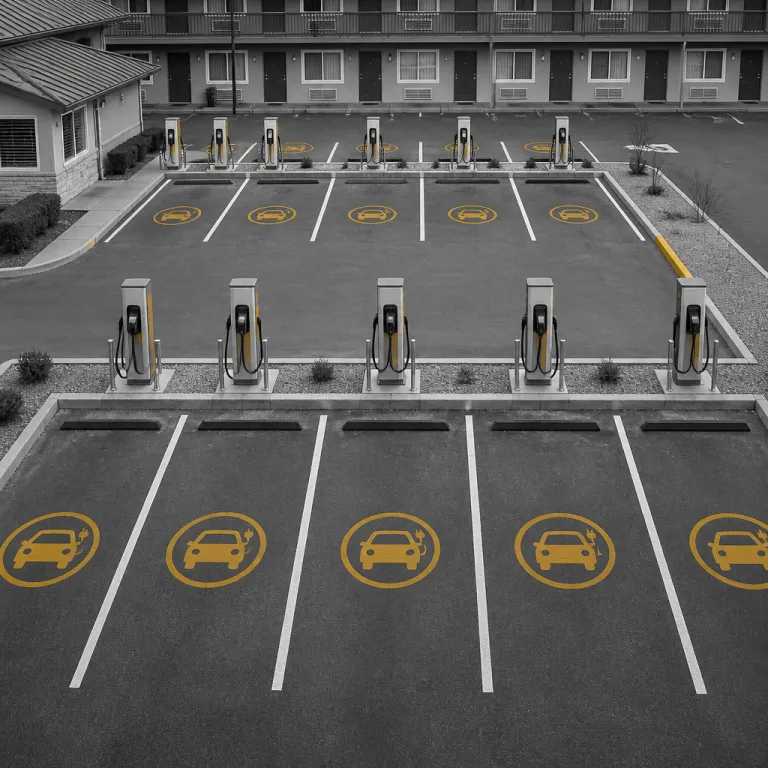
How california EV charging motel parking rules are rewriting the road trip
California is quietly turning the motel parking lot into essential electric vehicle infrastructure. For travelers, the new wave of California EV charging motel parking rules taking full effect by 2026 means that most spaces at newly built properties will be wired for power, not just a token charger near reception. This shift gives EV drivers the confidence to plan longer routes without obsessing over the next public charging station.
The California Building Standards Commission has updated building codes so that new hotels and motels must dedicate a substantial share of their parking to EV ready spaces. Under the 2022 CALGreen Nonresidential Mandatory Measures, for example, at least 10 % of parking at newly constructed nonresidential buildings must be EV capable, with additional EV ready and EV installed spaces required depending on project type and size. These requirements apply statewide, and local jurisdictions can adopt reach codes that push EV infrastructure targets even higher where air quality and traffic justify stronger action.
Behind the scenes, this is part of a broader program to expand charging infrastructure and support alternative fuels across the state. Legislators want cleaner air, lower emissions and a network where electric vehicles feel as practical as gasoline vehicles on every stretch of highway. As the Commission explains, EV capable and EV ready spaces are now treated as core building features, not optional extras. For you as a guest, the outcome is simple; modern California EV charging motel parking standards mean that pulling into a new build off Interstate 5 will increasingly include a realistic option to plug in overnight.
What EV ready motel parking actually means for your stay
EV ready does not always mean a visible charger mounted on the wall next to your parking space. Under the current California EV charging motel parking framework, a space is considered EV ready when it has the electrical infrastructure to support future installation of a charging station without tearing up concrete. That usually involves conduit, wiring sized for electric vehicle loads and a breaker panel with enough spare capacity to handle Level 2 charging on a 208–240 volt circuit, even if the final charger is installed later.
Regulators generally define EV ready spaces as those equipped with at least a 208–240 volt, 40 ampere branch circuit and a receptacle or hardwired EV supply equipment using standardized connectors such as SAE J1772 or the North American Charging Standard (NACS, commonly associated with Tesla). For travelers, that translates into practical compatibility with most electric vehicles on the road, whether you drive a compact hatchback or one of the larger premium vehicles. When you check a motel’s terms and conditions, look for clear language about which connectors are available and whether any eligibility requirements apply to use the chargers.
Luxury focused booking platforms now highlight EV charging and motel parking details alongside room categories and pool photos. On a refined booking page for a Phoenix property, for example, you might see a section similar to this elegant guide to reserving a premium motel stay, but with added filters for charging stations, fast charging options and parking layout. This level of transparency lets you compare prices, understand whether charging is complimentary or tied to a utility style tariff and decide if the motel’s energy mix aligns with your clean air priorities.
The gap between new builds and the classic roadside motel strip
Most of the motels that line California’s highways were built long before anyone thought about electric vehicles. That means the latest EV charging and motel parking requirements apply mainly to new construction, while existing properties face a slower, more complex path to modern charging infrastructure. For a solo explorer who loves retro neon and drive up rooms, this gap matters when planning where to stop and plug in, especially if you want to rely on overnight Level 2 charging rather than hunting for a separate fast charging plaza.
Some owners are leaning into incentives, using federal funding and state rebate programs to retrofit their parking with a mix of Level 2 charging and direct current fast charging, while others are still wrestling with installation costs, utility coordination and building codes that were never written with alternative fuel vehicles in mind. One Central Valley motel operator summed it up simply: “The demand is here, but we have to match it with the right power upgrades and still keep rooms affordable.” If you are chasing both character and kilowatts, resources like this guide to choosing affordable yet premium motels can help you weigh charm against infrastructure, especially when full compliance with newer California EV parking standards is not yet standard.
Financial realities also shape how quickly older properties adapt, as shown in this analysis of a 20 room motor lodge foreclosure and motel economics. Owners must balance energy upgrades, water and power efficiency, air quality improvements and guest facing amenities while keeping nightly prices competitive. For travelers, the practical takeaway is clear; always verify a motel’s charging stations, parking layout and any program specific eligibility requirements before you commit to a long leg of your journey.
Why the classic motel layout is perfect for EV charging infrastructure
California’s roadside motels were built for the car, and that is now paying off for the electric vehicle era. Single story wings wrapped around open parking lots make it far easier to run conduit, manage installation logistics and position each charging station close to guest doors. Compared with multi level hotels where parking is buried in a garage, the humble motor court offers a surprisingly elegant canvas for charging infrastructure.
From an engineering perspective, shorter cable runs mean lower power losses and simpler coordination with the local municipal utility or other public utilities. Owners can often tap existing electrical rooms, add panels sized for Level 2 charging and then phase in fast charging bays where demand justifies the extra direct current hardware. For guests, that translates into more predictable access to charging stations, less time circling for a compatible bay and a better balance between overnight charging and quick DC fast top ups during a brief stop.
Even residential style motels that operate almost like long stay apartments can integrate California EV charging motel parking requirements with minimal disruption. Their parking is usually surface level, with clear lines of sight that improve safety and air quality monitoring around chargers. When you filter for properties on a premium booking website, pay attention to how the motel describes its parking; a well designed lot with thoughtful charging infrastructure will feel as considered as the room design or pool deck.
How motels are paying for chargers: incentives, utilities and smart power
Installing EV charging is not just a matter of bolting hardware to a wall. For many motel owners, the economics of meeting California’s EV ready motel parking expectations hinge on incentives, rebate schemes and careful coordination with the local utility. As a traveler, understanding this financial backdrop helps you read between the lines when a property explains why it charges certain prices for a charging session.
Federal programs such as the Alternative Fuel Infrastructure Tax Credit under Internal Revenue Code Section 30C can cover up to 30 % of eligible equipment and installation costs for each charging station, while some state level funding targets low income communities or corridors with poor air quality. Public utilities and municipal utility districts often run their own program of rebates, offering better tariffs for off peak charging or support for water, power and energy efficiency upgrades that free capacity for EV loads. These incentives come with terms and conditions, including eligibility requirements tied to location, income levels or the share of spaces dedicated to electric vehicles versus conventional vehicles.
To avoid expensive grid upgrades, many motels now use Automatic Load Management Systems that allocate power dynamically between multiple charging stations. This technology lets a property operate several Level 2 charging ports and even a couple of fast charging bays without overloading the main service, smoothing demand across the night. For guests, the result is a more reliable charging experience, where compliance with California EV charging motel parking rules does not translate into surprise outages or queues caused by underpowered infrastructure.
Planning a luxury minded EV road trip across California
For the solo explorer in a premium electric vehicle, modern EV ready motel parking rules turn route planning into a more refined exercise. Instead of hunting for a standalone charging station in an industrial park, you can prioritize motels where charging infrastructure is integrated into the parking layout and guest experience. That shift lets you think about pool temperature, mattress quality and air quality in the room with the same seriousness as kilowatt hours.
Start by mapping your route against corridors where alternative fuels infrastructure is already dense, then layer in new builds that comply fully with the latest building codes. Many luxury leaning motels now highlight whether their charging stations offer only Level 2 charging or include direct current fast charging for a quick top up before an early departure. When you read property descriptions, look for clear references to how the motel applies statewide CALGreen standards, whether any program specific eligibility requirements apply and whether low income guests receive discounted charging as part of broader clean air initiatives.
Before you book, verify the number of chargers, the mix between overnight and fast options and whether parking is reserved for EVs or shared with conventional vehicles. Some properties treat charging as a complimentary amenity bundled into higher room prices, while others meter energy use and bill it like a utility, with transparent terms and conditions. Either way, updated California EV charging motel parking regulations mean that the best motels now treat electrons as carefully as they treat linens, making sustainable travel feel less like a compromise and more like an upgrade.
Key figures shaping EV ready motel parking
- State building standards currently reference EV capable, EV ready and EV installed requirements in the CALGreen Code; for many new nonresidential projects, at least 10 % of parking spaces must be EV capable, with additional EV ready and installed spaces specified in Section 5.106.5.3 of the 2022 CALGreen Nonresidential Mandatory Measures.
- The California Building Standards Commission oversees these building codes statewide, ensuring that every new compliant motel contributes to a denser charging infrastructure network for travelers.
- Legislative updates focus on increasing EV infrastructure, supporting EV adoption and reducing emissions, which directly improves air quality along major travel corridors.
- Federal level incentives such as the Alternative Fuel Infrastructure Tax Credit can cover up to 30 % of eligible equipment and installation costs per charger, making it easier for motels to add both Level 2 charging and fast charging options.
- Statewide enforcement uses tools such as the CALGreen Code and inspection protocols, so that EV ready parking is checked alongside structural safety and water and power efficiency during construction.
FAQ: EV ready motel parking in California
What does “EV ready” motel parking actually include ?
“EV ready” motel parking means that spaces are built with the electrical infrastructure needed to support EV charging, including conduit, wiring and panel capacity for at least a 208–240 volt circuit and compatible EV supply equipment. The formal explanation from regulators is: “Parking spaces equipped with infrastructure to support EV charging.” For guests, that means the motel can add or upgrade charging stations without major construction.
Are all motels in California required to provide EV ready parking ?
All new motels must comply with the latest California EV charging and motel parking building codes, which set minimum shares of EV capable and EV ready spaces. Existing motels are not automatically forced to retrofit, but many choose to add charging infrastructure using incentives and rebate programs. When booking, always check whether a specific property has already upgraded its parking.
When do the stricter EV ready parking rules take effect ?
Regulatory updates for EV ready parking in California are tied to the triennial building code cycle administered by the California Building Standards Commission. The current CALGreen edition took effect January 1, 2023, and the next scheduled statewide update is planned for January 1, 2026, subject to final rulemaking. For travelers, that means motels opening after each effective date should have a higher share of EV capable and EV ready spaces than older properties.
How can I check if a motel has reliable EV charging before I book ?
Use premium booking platforms that list EV charging and motel parking details, including the number of charging stations, connector types and whether fast charging is available. Then visit the motel’s own website or call the front desk to confirm parking layout, any terms and conditions for use and whether spaces can be reserved. Cross checking this information with EV mapping apps helps avoid surprises on arrival.
Do EV ready requirements change how much motels charge for parking or charging ?
Some motels bundle charging costs into higher nightly prices, while others bill energy use separately based on utility style tariffs. Incentives and funding can offset installation costs, but owners still need to recover maintenance and power expenses over time. Transparent pricing and clear eligibility requirements for discounted charging are good signs that a property takes both sustainability and guest trust seriously.