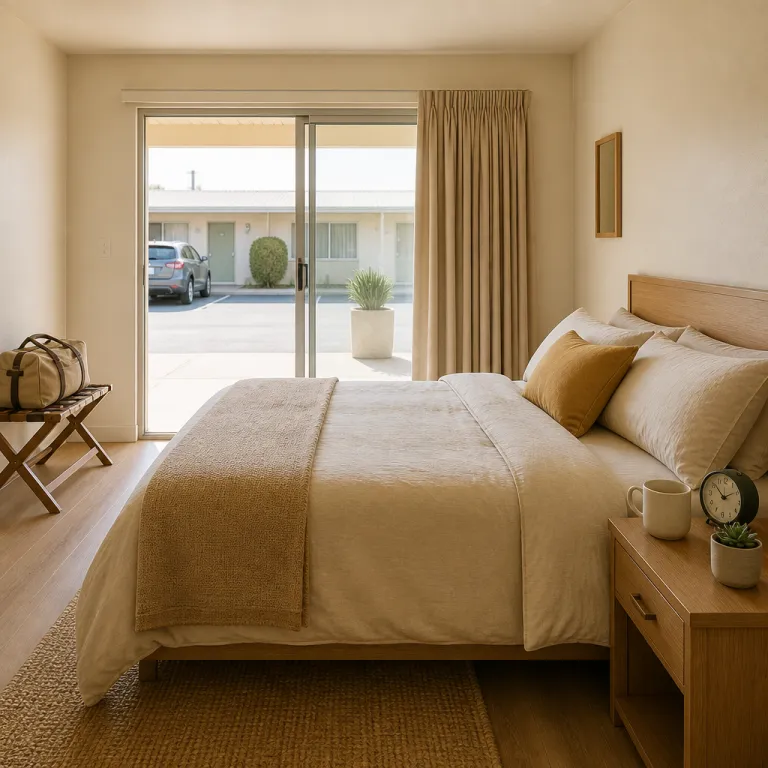
The low stimulation thesis: why quiet motels feel like wellness retreats
Step out of your car, key in hand, and the first thing you notice is the quiet. In a well kept roadside motel, the low density layout, the lack of lobby theatrics, and the direct access to your room create a motel quiet escape wellness low stimulation that many luxury hotels try to simulate with elaborate wellness programming. For travelers used to escalators, elevators, and background playlists, this kind of quiet travel can feel like an instant digital detox.
Most motels are built horizontally, not vertically, so guests move along open air walkways instead of queuing for elevators. That simple architectural choice keeps guests from stacking on top of one another, and the low stimulation design means fewer overheard conversations, fewer corridor encounters, and a calmer hospitality rhythm from the moment you arrive. In practice, this structured layout turns the entire property into a place to breathe, where people can feel their shoulders drop before they even swipe a key card.
For burnout professionals and sensory sensitive travelers, that calm is not a luxury extra ; it is the whole point of the experience. When hotels evolving into wellness destinations add sound baths and sleep coaches, the best motels quietly offer focused experiences that start with silence, privacy, and space. The result is a kind of understated luxury travel where the motel quiet escape wellness low stimulation effect comes from what you do not hear or see, rather than from experiences packed into a schedule.
Architecture as wellness: space, air, and the power of the parking lot
Look past the neon sign and you will see how the classic motel format is built for decompression. Rooms open directly to the outside, so the moment you step out you are in open air rather than an air conditioned atrium, and that immediate contact with sky, trees, or desert is a quiet travel advantage that many luxury hotels cannot replicate. When a property is structured around a central courtyard or pool, the entire space feels like a small village rather than a vertical machine for processing guests.
In wellness hotels, architects often design labyrinthine corridors and dramatic lobbies, then add wellness programming to compensate for the sensory overload. Motels flip that script by keeping circulation simple, which keeps guests oriented and reduces the low level stress of navigating a complex hotel. For people who feel drained by crowds, this low density layout and low stimulation environment can be the difference between a trip that restores and a trip that exhausts.
The best design led motels lean into this format with private terraces, shaded patios, and small gardens that extend each room into an outdoor living room. These focused experiences turn a basic place to stay into a personal wellness zone, especially when the motel quiet escape wellness low stimulation atmosphere is protected by clear quiet hours and thoughtful operations. For a deeper dive into how soundproofing, saunas, and sunrise pools are reshaping this segment of hospitality, explore this guide to the motel as a wellness retreat.
The pool, the sky, and the art of doing almost nothing
At a luxury resort, the pool can feel like a stage, with DJs, daybeds, and experiences packed into every hour. In a well maintained motel, the same kidney shaped pool becomes a meditation space, especially at sunrise when the parking lot is quiet and the only sound is the filter humming. This is where low stimulation travel trends meet old school hospitality, and where travelers realize that wellness can be as simple as twenty laps before coffee.
Because motels are usually low density properties, the pool deck rarely feels crowded, and guests move in a more relaxed rhythm between room, water, and car. There is no need for towel attendants or reservation systems ; the space is structured for spontaneity, which keeps guests from feeling managed or choreographed. That freedom is a subtle form of luxury, especially for people whose daily lives are built around calendars and notifications.
For solo travelers, introverts, and couples who focus on connection rather than spectacle, this kind of motel quiet escape wellness low stimulation setting can feel more restorative than any spa circuit. You swim, you read, you watch the light change on the concrete, and the experience feels both grounded and indulgent. If you are planning a road trip or a seamless airport layover and want this level of calm near the runway, use this guide to finding premium motels near airports to filter for quiet, pool centric stays.
Who low stimulation motels really serve: burnout, sensitivity, and quiet luxury
Not every traveler wants a schedule of classes, tastings, and curated activities when they travel. For many people in high stimulus jobs, the most valuable wellness experience is a motel quiet escape wellness low stimulation stay where nothing is expected of them beyond showing up. This is where motels, rather than luxury hotels, can feel like the truest form of luxury travel.
Burnout professionals often arrive late, park close to their door, and feel the calm of not having to cross a lobby in office clothes. Sensory sensitive guests appreciate that there is no background music in corridors, no crowded elevators, and no surprise encounters every time they leave their room. Couples who focus on conversation over spectacle often choose properties with private terraces or small patios, where the open air and low density layout keep the outside world at arm’s length.
For solo explorers, the appeal is partly psychological ; a motel room can feel like a personal studio, a compact space built for rest, reading, and reflection. When hotels are turning toward ever more elaborate wellness concepts, these modest properties quietly offer experiences that feel more honest and less performative. On platforms like motel-stay.com, where we curate design led motels and focused experiences, you can filter for quiet travel priorities and find a place to stay that keeps guests at the center rather than the brand narrative.
How to read photos, reviews, and design cues for true quiet
Low stimulation does not mean low standards, and the line between simplicity and neglect matters. When you scan photos, look for structured landscaping, fresh paint, and clean lines around windows and doors, because these details signal a property that is built and maintained with care. A motel quiet escape wellness low stimulation stay should feel intentionally minimal, not accidentally rundown.
Guest reviews are your best early warning system, especially from travelers who mention noise, cleanliness, and how the space feels at night. Phrases like “thin walls”, “parking lot parties”, or “loud HVAC” suggest that the calm you seek may be compromised, while mentions of quiet hours, respectful guests, and attentive on site management indicate that the hospitality team keeps guests protected from disruption. Pay attention to how people describe their moment of arrival, because that first impression often reveals whether the property delivers on quiet travel promises.
Design cues also matter ; look for design led touches such as blackout curtains, solid doors, and simple, well placed lighting rather than flashy décor. These elements show that the hotel or motel has focused experiences in mind, prioritizing sleep, privacy, and low stimulation over spectacle. For a curated list of such properties, including classic neon signed motor courts and contemporary luxury hotels that behave like motels, explore our guide to premium comfort motel stays that balance quiet with comfort.
FAQ
How is a low stimulation motel different from a standard hotel for wellness focused travel ?
A low stimulation motel usually has fewer floors, fewer shared spaces, and direct outdoor access, which naturally reduces noise and social friction. Standard hotels often centralize activity in lobbies, bars, and elevators, which can feel overwhelming for travelers seeking quiet. For wellness focused travel, the motel format offers calm through layout and operations rather than through add on wellness programming.
What should I look for when booking a motel quiet escape wellness low stimulation stay ?
Prioritize properties with low density layouts, clear quiet hours, and rooms that open to open air walkways or private terraces. Read recent reviews that mention how quiet the property feels at night and whether guests move easily without crowding. Photos that show clean, structured outdoor space and simple, design led rooms are strong indicators of a calm, wellness friendly place to stay.
Are motels suitable for luxury travel if I usually book high end resorts ?
Luxury travel is increasingly defined by how a place makes you feel rather than by marble and chandeliers. Many premium motels now offer high quality bedding, thoughtful amenities, and focused experiences in compact spaces that keep guests comfortable without sensory overload. If your priority is rest, privacy, and a digital detox, a carefully chosen motel can deliver a luxury experience at a fraction of the complexity.
How can I tell from photos if a motel is calm or neglected rather than simply quiet ?
Look closely at details such as paintwork, landscaping, and the condition of doors, windows, and railings, because these reveal whether the property is actively maintained. A true low stimulation motel will feel intentionally minimal, with clean lines and uncluttered space, while neglect shows up as peeling finishes, broken fixtures, and poorly lit corridors. Combine this visual check with reviews that mention safety, cleanliness, and how the property feels after dark.
Who benefits most from choosing low stimulation motels for quiet travel ?
Burnout professionals, introverts, sensory sensitive travelers, and couples who value conversation over spectacle often benefit most from this format. They appreciate that the hospitality experience is built around privacy, calm, and ease of movement rather than around constant social contact. For these guests, the motel quiet escape wellness low stimulation environment can feel more restorative than any schedule of experiences packed into a resort stay.