The structural edge: why low rise motels start with less impact
On World Tourism Day, the conversation around motel sustainability environmental footprint tourism finally feels overdue. Single level properties in the hospitality industry often begin with a structural advantage over tall hotels, because a low rise layout quietly trims energy consumption before any sustainable practices are added. For business leisure travelers extending a trip, that means the right motel can align comfort, efficiency and sustainable tourism without fanfare.
Most motels operate with direct outdoor access to each room, which reduces the need for large air conditioned corridors and lobby spaces that dominate a conventional hotel. With less shared volume to heat or cool, total energy use per room can fall, and the environmental impact of each stay can shrink in ways that matter for climate conscious guests. When you compare similar locations, this format can reduce the carbon footprint of short stays, especially in mild climates where natural cross ventilation replaces mechanical systems for much of the tourism season.
There is also a mobility advantage that speaks directly to sustainable hospitality in the tourism sector. Fewer elevators and simpler circulation spaces mean lower standby energy consumption, which is one of the quiet drivers of carbon emissions in the wider hotel industry. For travelers who care about sustainability but still want a polished hospitality experience, this is where the motel format starts to look less like nostalgia and more like a pragmatic response to climate change.
Land, light and air: how motels can turn sprawl into sustainable hospitality
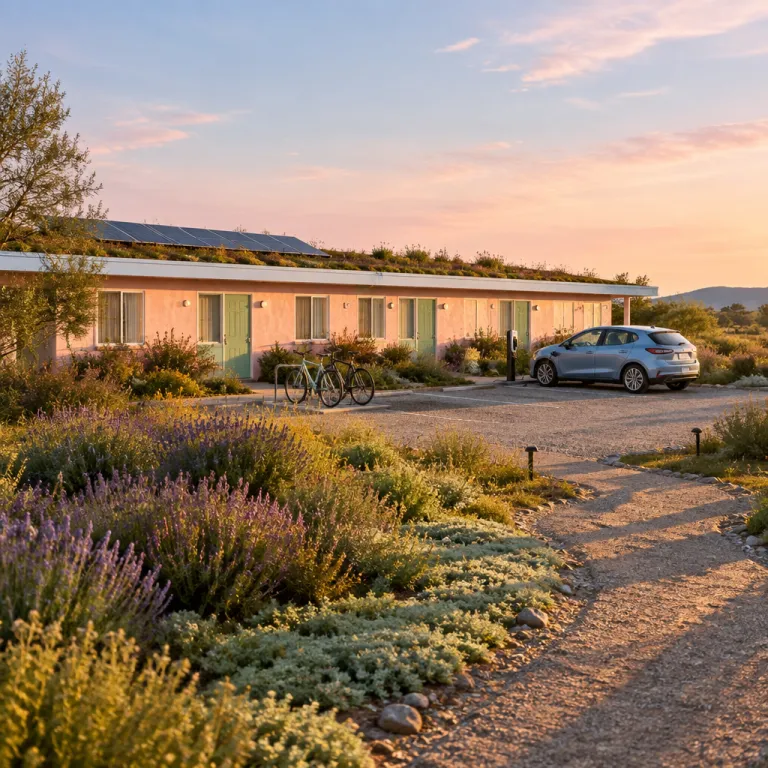
Horizontal layouts shape motel sustainability environmental footprint tourism in ways that vertical hotels rarely match. A single story motel spreads across the site, leaving more permeable ground for rainwater, native planting and shaded parking that collectively reduce heat island impact. When owners lean into environmental sustainability, that extra roofline becomes prime real estate for solar panels that offset energy consumption from each room.
In the hospitality sector, this land use pattern can support eco friendly landscaping that cuts water waste while still feeling lush to arriving guests. Think gravel beds with drought tolerant plants instead of thirsty lawns, shaded walkways that lower surface temperatures and reduce air conditioning demand, and bioswales that manage storm water instead of sending it straight into overworked city systems. These visible sustainable practices signal to eco conscious travelers that the property is serious about environmental impact, not just talking about sustainability in marketing copy.
For executives turning a work trip into leisure, these details can guide smarter booking choices across the tourism sector. When you see solar arrays, refillable amenities instead of single plastics and clear signage about food waste separation, you are looking at a motel that treats sustainable tourism as an operational standard. This is exactly the type of property examined in depth when the ESG checkbox becomes a booking filter in the hospitality industry, a shift explored through the lens of motel operations in this analysis of sustainability reshaping motel operations.
Where motels fall short, and why retrofits change the carbon math
The same low slung buildings that help motel sustainability environmental footprint tourism can also hide problems. Many classic roadside properties still run on aging HVAC units, thin insulation and inefficient lighting that push energy consumption per room higher than necessary. Without upgrades, these motels risk locking in avoidable carbon emissions and undermining the sustainable hospitality story that the format could credibly tell.
Water systems often show the same pattern, with dated fixtures that increase water waste and raise utility costs for owners in the hospitality industry. Older laundry equipment, leaky irrigation and a lack of low flow fittings can quietly inflate the environmental impact of each stay, even when housekeeping teams work hard to keep every room clean and comfortable. Food waste management is another weak point, especially at motels that have expanded breakfast offerings without adding proper composting or donation partnerships.
The opportunity is that small properties can retrofit faster and with less disruption than large hotels in the broader hotel industry. Swapping to LED lighting, installing smart thermostats and adding occupancy sensors are relatively low cost moves that quickly reduce carbon footprint and improve energy efficiency across the property. For travelers, visible changes such as refill stations that cut single plastics, signage about sustainable practices and third party labels from credible green certifications in the hospitality alliance space, such as those explained in this guide to green certifications for motels, are reliable signals that the motel is taking environmental sustainability seriously.
How to book smarter on World Tourism Day: a road tested checklist
For business leisure travelers, motel sustainability environmental footprint tourism becomes real at the booking screen. Start by comparing properties in the same area and look for clear commitments to sustainability, not vague green language that never mentions specific sustainable practices or measurable reductions in carbon emissions. A credible motel will usually reference energy efficiency upgrades, water conservation steps and concrete targets that align with the wider hospitality alliance focus on responsible tourism.
On arrival, let the property show you how sustainable hospitality works in practice, from the parking lot to the room. Solar panels on single story roofs, native landscaping that reduces water waste and refillable amenities that avoid single plastics all point to a serious approach to environmental sustainability. Inside the room, smart thermostats, efficient lighting and clear options for linen reuse indicate that the motel is actively trying to reduce energy consumption and overall environmental impact without compromising comfort.
When you extend a work trip into leisure, your motel choice becomes a small but real climate decision within the tourism sector. Choosing a property that manages waste responsibly, limits food waste at breakfast and communicates transparently about its carbon footprint supports a more sustainable tourism culture across the hospitality sector. For travelers who value calm as much as carbon awareness, the low stimulation strengths of the format are explored in depth in this guide to low stimulation motel travel, which pairs neatly with an eco conscious approach to where you sleep.
FAQ
How can I tell if a motel is genuinely sustainable and not greenwashing ?
Look for specific details about sustainability rather than broad claims, such as clear information on energy efficiency upgrades, water saving fixtures and waste reduction programs. Genuine properties usually explain how they reduce carbon emissions, manage food waste and limit single plastics, sometimes referencing recognized standards from the hospitality industry. On site, visible features like solar panels, refill stations and native landscaping are stronger indicators than generic signs asking guests to reuse towels.
Do motels really have a smaller carbon footprint than larger hotels ?
Many motels start with a structural advantage because they have fewer elevators, smaller common areas and more opportunities for natural ventilation, which can lower energy consumption per room. That said, the actual carbon footprint depends heavily on whether the property has modern insulation, efficient HVAC and updated lighting. A well maintained motel with sustainable practices can outperform an older high rise hotel on environmental impact, but a neglected property may still waste significant energy and water.
What should I look for in a motel room if I care about environmental impact ?
Check for LED lighting, smart or programmable thermostats and clear options to reuse linens, all of which help reduce energy use and water waste. Refillable bathroom amenities instead of single plastics, recycling bins and information about local sustainable tourism options are also positive signs. If the motel shares data about its environmental sustainability goals or carbon footprint, that transparency usually reflects a more serious commitment.
Can choosing a sustainable motel really make a difference for climate change ?
Individual stays are small, but repeated choices across the tourism sector send strong signals to the hospitality industry about what guests value. When travelers consistently book motels that prioritize sustainable hospitality, owners have a financial incentive to invest in energy efficiency, water conservation and better waste management. Over time, those upgrades reduce cumulative carbon emissions from the hospitality sector and support broader climate goals.
Are there trade offs between comfort and sustainability in motels ?
In many modern properties, sustainable practices actually enhance comfort by improving air quality, lighting and temperature control in each room. Well designed systems reduce drafts, noise and harsh lighting while still cutting energy consumption and environmental impact. When a motel communicates clearly and invests thoughtfully, guests usually experience both higher comfort and a more eco friendly stay.